


Handmade Matters: Jon Grant on the profound experience of making a chair
Nestled deep within a hidden valley in Tasmania awaits a simple chair-making studio. A unique place of inspiration, conversation and shared experience. A workspace that seamlessly blends old and new, paying homage to rich traditions. A cabin that forges friendships and celebrates creativity. Why? Because handmade matters.
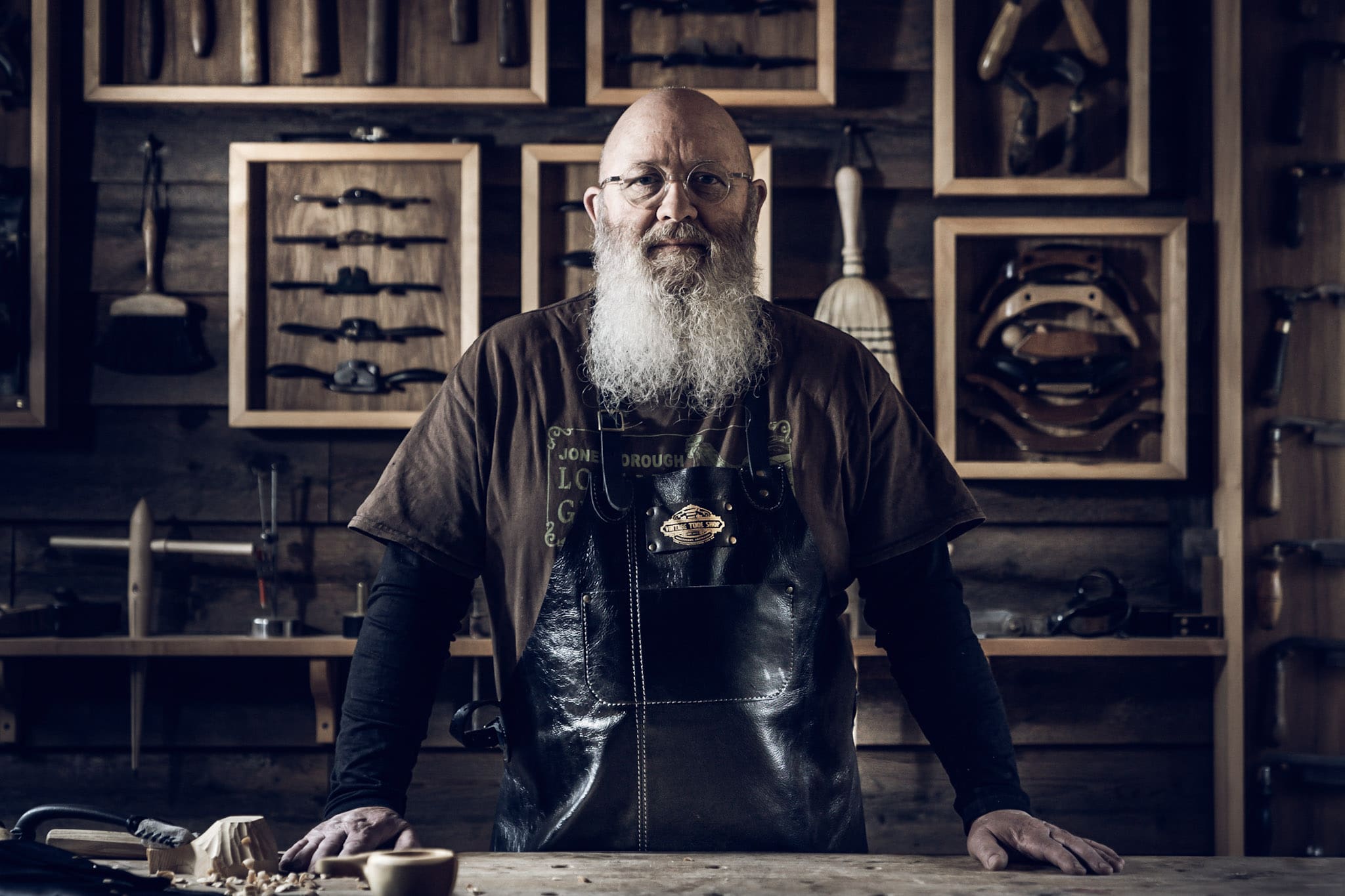
Jon’s love of woodwork began as a student at New Town High in Hobart, where at 15 he made a wood turning lathe as part of a metalwork project, a lathe he still uses today. Jon went on to be a vocational teacher in Agriculture and Horticulture, but always maintained a fascination with wood. Today, he combines his two passions, making handmade wooden chairs and education, teaching people in his woodwork studio, Handmade Matters.
“I have been making Windsor chairs for around 18 years. Most of my work is teaching; I don’t chase commissions; I really sell an experience to people. Chair making is a different type of woodwork from furniture or cabinet making. The chairs have thin spindles that have to be split and shaped and the curved crests have to be steam bent, so I mostly work with green Blackwood logs, because Blackwood splits and bends well. Tasmanian Blackwood is ideal for this and its readily available.”

A line of sight to the forest
Jon wants his students to feel the connection between a tree and the timber. He often takes students into the forest to stand beneath tall trees. To feel a connection between a tree, where their chair begins.
“People from Melbourne or Sydney buy timber from a timber importer. I draw a line of sight between the forests and their piece of furniture. They split the log open in my paddock; it’s not a processed piece of timber, and they go from there. People get the connection between a tree and the furniture. I like that connection.”
Visitors to Jon’s studio describe the experience as profound. Chloe, who spent a week making a chair said:
“I’m still in the afterglow of the glorious week spent working on the chair. Jon has created a powerful space for learning, inspiration and connection to an age-old craft. I have come away feeling so much richer for experiencing it.”
People who travel to the valley attend Jon’s chairmaking workshops, enjoy the simplicity of working with hand tools, drying their timber in a kiln and the slow pace of starting with something crude and working in increments to produce a finished product.
“I now look at timber more creatively and seek a more personal connection with the concepts of handmade. My project with Jon involved much more than a chair,” said another customer, Jim.
There is a story behind a handmade piece of furniture
Jon says that it is important to have a story behind handmade work:
“I don’t use sandpaper; my chairs are all finished with edge tools, drawknife, spokeshaves etc. I don’t like to sand away the fact that it is handmade. A tool finish tells a story. This also speaks to sustainability. We live in this world of disposable mass-produced stuff. I have a young friend who can put a dining chair into the market that is all handmade for $900. For the person who buys that chair, it will be in their lives for generations. Cheaper furniture will be out on the nature strip in hard rubbish in a few years.”

The American versus the English style of chair making
Jon’s Blackwood chairs are finished with milk paint or Tung oil. This harks back to the old traditions of how Windsor chairs were traditionally made. Windsor chairs were English and of the working class, so they were traditionally oiled. But Jon also works in the American style, which means painting the finished product.
“In the Americas, in the Appalachian Mountains, there is an incredible diversity of timbers so they could choose timbers to suit the purpose of the component such as Maple for turned legs or White Oak for split or bent parts. As the chairs are made of different timbers, and then painted to get a matching set.”
Jon often travels to the United States, where he is seen as a master of his craft, “I’m just exotic as I come from somewhere else,” he modestly laughs; however, his deep love and understanding of the culture of woodwork and his skills are no doubt recognised in the country where woodwork is seen as an important part of their culture.
“When I go to the US, I am part of this rich community of people who hold the craft up as cultural heritage; as something really important. In Australia, a lot of woodwork has been taken out of the school curriculum, and when they do have it in some schools, they do minimal stuff because of risk. I run a mentoring project for young people, as [working with timber, learning the art of woodwork] is just powerful stuff. I’d like to foster it a lot more and encourage other older craftspeople to mentor.”

Creativity and a strong sense of purpose
Jon believes creativity gives people a strong sense of purpose and sets them up for lifelong learning. He is currently working to set up a foundation to create not-for-profit scholarships for young Tasmanians to pursue creative arts. He has been awarded a Churchill Fellowship to travel to New Zealand and the UK to learn from other organisations that provide youth scholarships and mentors for young people.
“I am travelling to NZ and the UK mid next year to look at organisations and how they are run, establish a bequest for old woodworkers as there is a lot of good timber sitting in old blokes’ sheds, and it goes to waste. I want to put it in the hands of young people.”
Timber from the land where you live
Jon also believes that timber should come from the land where you live. “It is interesting to understand timber, where it comes from, and how it is managed as a material. This applies differently to any wood you are working with. “
“From a sustainability point of view, timber is important; having access is critical and understanding it is critical. The product is sustainable. Tasmania has the potential to be a creative hub, and the timber industry is an important part of that.”
“American White Oak is so fashionable; they used to want American Cherry. It’s a trend. I work with the attributes of the timber around us. It is ridiculous to import it when we have such amazing timber here.”
Jon is also interested in working with Tasmanian plantation timber. He likes the idea of a traditional Tasmanian chair of the past made with a timber of the future.

Tradition, culture and connection
Jon’s love of wood and his craft come through in everything he does. The beautiful handmade chairs taken home by his clients are enriched by the profound experiences people have by being introduced to working with wood, turning a green log into a beautiful piece of handmade furniture.
There are Tasmanian Blackwood stools and Windsor chairs in pride of place in homes around Australia that carry the story of the experience of being in Jon’s studio, of slowing down, working with hand tools and creating something that will be treasured always for not only its beauty, but for the memories embedded in the very soul of the timber.
To find out more about Jon’s workshops, visit Handmade Matters.
Note on Timber: Jon sources his Blackwood logs from Island Specialty Timbers where the logs have a clear Chain of Custody and are PEFC certified.