


Too Good for the Tip: What a Timber Restorer Knows That Designers Should Too
A $30 chiffonier. A wardrobe no one had room for. A Tasmanian Blackwood dining table that no longer suited the family who owned it. Most people would see a trip to the tip. Chris Simpson saw a side table, a sideboard and a hall table.
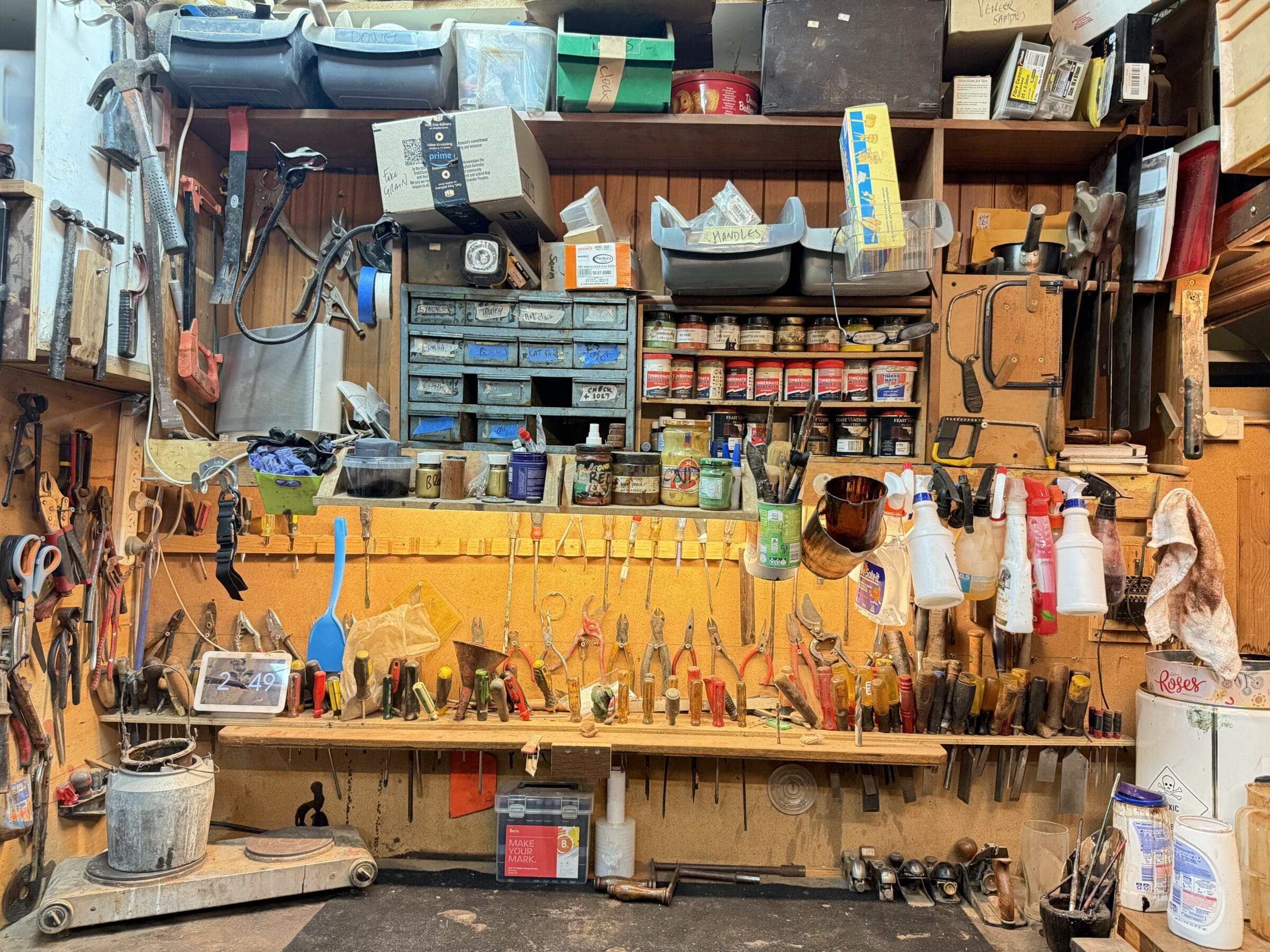
Chris has been doing this kind of work since 2004 at C Simpson Restorations, his workshop in Forest Lodge. Over two decades the business has grown to cover on-site maintenance, repairs to damaged and worn furniture, and rebuilding unwanted pieces into something new. It all rests on one idea that anyone specifying a fit-out should hear: solid timber rarely wears out. It gets thrown out because tastes change.

The business case for durability
The very fact that our business exists proves the durability of timber,” says Simpson. “We have long-running maintenance contracts where we go back every year just to clean and wax timber fireplaces and fittings – it takes us under a day, and it’ll be there for hundreds of years if it’s looked after.
That upkeep is minimal by design: an occasional coat of beeswax is usually enough, and minor damage, like a scratch in a French-polished surface, can be repaired on the spot without dismantling the piece. Chris takes a light-touch approach to restoration – cleaning off grime but avoiding sanding out patina, since the grain and colour variation built up over decades are part of a piece’s character, not damage to erase.

Trends, not failure, drive timber to landfill
Much of the structurally sound timber furniture Chris sees is discarded because it no longer suits current trends – built-in wardrobes making freestanding ones redundant, for example – not because it’s failed. “A hell of a lot” ends up in landfill this way, he says, describing council clean-ups as full of usable, solid timber pieces.
That gap is where Chris operates. Auction houses call him before pieces are thrown out, and he restores or rebuilds them into something new.
A practical opportunity for designers
The same pattern shows up in commercial fit-outs, where MDF is typically ripped out and replaced with every change of tenancy, generating ongoing waste. Solid timber tells a different story: it can be maintained, adapted or handed on well beyond a single occupancy – outlasting tenancy after tenancy where MDF would need replacing each time. Repurposed timber can even undercut the cost of new MDF, while lasting decades longer.
For interior designers, that opens a few practical ways to work with a business like C Simpson Restorations rather than defaulting to new engineered timber:
- Sourcing and repurposing for a project. Designers can brief Chris early on a fit-out or residential job and have him source suitable pieces through his auction house contacts, then rework them to spec – resizing, re-legging or rebuilding furniture to fit a new floor plan, in the same way he’s turned an unwanted wardrobe into a sideboard or a dining table into a hall table.
- Restoring existing timber on-site. For heritage or older buildings, existing timber fittings, panelling and furniture can often be cleaned and restored in place rather than replaced, preserving original detail that would be costly to reproduce.
- Ongoing maintenance partnerships. Once a project is fitted out in solid timber, a simple maintenance contract keeps it looking its best with an annual clean and wax, rather than a costly refit down the track.
- End-of-lease planning. Because solid timber holds its value, designers can plan for what happens at the end of a tenancy from the outset – selling, auctioning, or handing pieces on to the next occupant – instead of treating a fit-out as disposable.

A business like C Simpson Restorations makes all of this achievable in practice. Designers don’t need to handle the sourcing or restoration – they can specify with reuse in mind and leave that execution to a restoration specialist.
The more we look after furniture, make it last, and repurpose what’s still perfectly good, the less ends up in landfill, says Simpson.
Working with Tasmanian timber
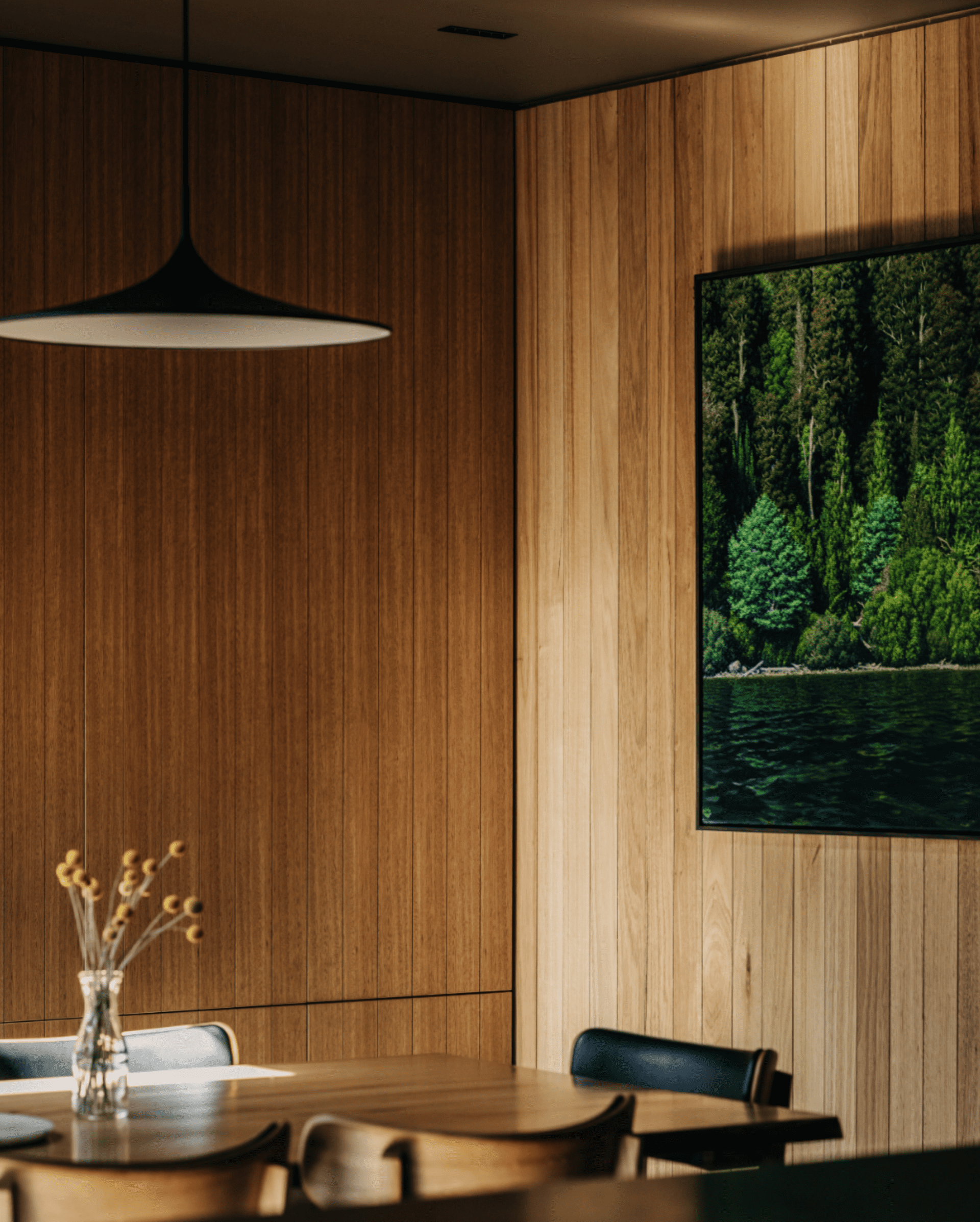
Chris speaks highly of Tasmanian Blackwood, drawn to its rich colour, grain and the way it develops such a beautiful patina over time. A recent job involved regluing and carefully cleaning a set of carved blackwood dining chairs, without stripping out their earned character. He’s equally enthusiastic about Tasmanian Oak, valuing its workability and stability for chairs and furniture more broadly. For a business built on reworking timber over decades, and for designers specifying furniture meant to last, those are exactly the properties that matter.

Choices that decide a timber piece’s future
Longevity comes down to more than species. Traditional animal glue is reversible – a loose joint can be reheated, cleaned and reglued indefinitely – while modern epoxies bond so strongly that a failed joint breaks the surrounding timber instead, closing off repair altogether. For commercial fitouts where sustainability and indoor air quality are priorities, traditional animal glues excel because they are 100% bio-based, non-toxic, and contain 0 g/L of Volatile Organic Compounds. They can be sourced in commercial quantities and used for the assembly of custom veneer feature walls, reception desks or solid wood panelling.
The same applies to finishes: modern lacquers seal timber under an effectively plastic layer, while traditional finishes like French polish stay flexible and repairable in place.


The choice of glue and finish is what decides a piece’s fate. Reversible glue and a breathable finish keep it serviceable – a restorer can maintain and rework it for decades. Permanent glue and a sealed lacquer trade that away: the piece looks durable until its first repair, and then it’s landfill.