

Building with mass timber: understanding the perceived barriers and how to move past them
Interest in mass timber construction is growing across Australia, driven by its potential to reduce emissions while creating high-quality, human-centred buildings. But while momentum is building, delivery has not always kept pace.
Ultimately, the shift toward timber isn’t just a change in building materials; it’s a change in mindset. It requires us to rethink how we design, who we collaborate with, and how we measure risk. As these systems align, the ‘timber revolution’ moves from a technical challenge to a standard way of building a sustainable future.
Recent research by the Centre for Sustainable Architecture with Wood (CSAW), combining a review of existing literature with stakeholder interviews from Tasmanian commercial projects, highlights a clear pattern: there are perceived barriers to mass timber adoption, but they are not insurmountable. Rather, they reflect an industry in transition, where systems, knowledge and expectations are still catching up with the exciting opportunities that timber presents.
From supply chains to industry capability and compliance, we explore the challenges experienced by early adopters of mass timber construction in Tasmania and how their commitment to building sustainably has paved the way for future designers.

Procurement, supply chains and the timing challenge
One of the most consistent themes in the research is not simply cost, but coordination: specifically, how timber fits (or doesn’t fit) within current conventional procurement models.
Mass timber construction requires earlier decision-making, clearer specifications, and closer collaboration between designers, suppliers and builders. But many projects are still structured around competitive tendering processes that prioritise flexibility and lowest upfront cost. In this environment, timber can be easily substituted, or sourced from outside Tasmania or Australia, even where local options exist.
Timing is another critical factor. Unlike conventional materials, many timber products – particularly hardwoods and bespoke mass timber elements – require longer lead times and more upfront design resolution.
As Michael Lee, a technical expert in Tasmanian timber, explains:
Early engagement is essential. If you’re looking at a hardwood product, you need to be at least 12 months out. The earlier that you can get into it, the more you can talk to the timber providers and actually see what you can use. It drives the design.
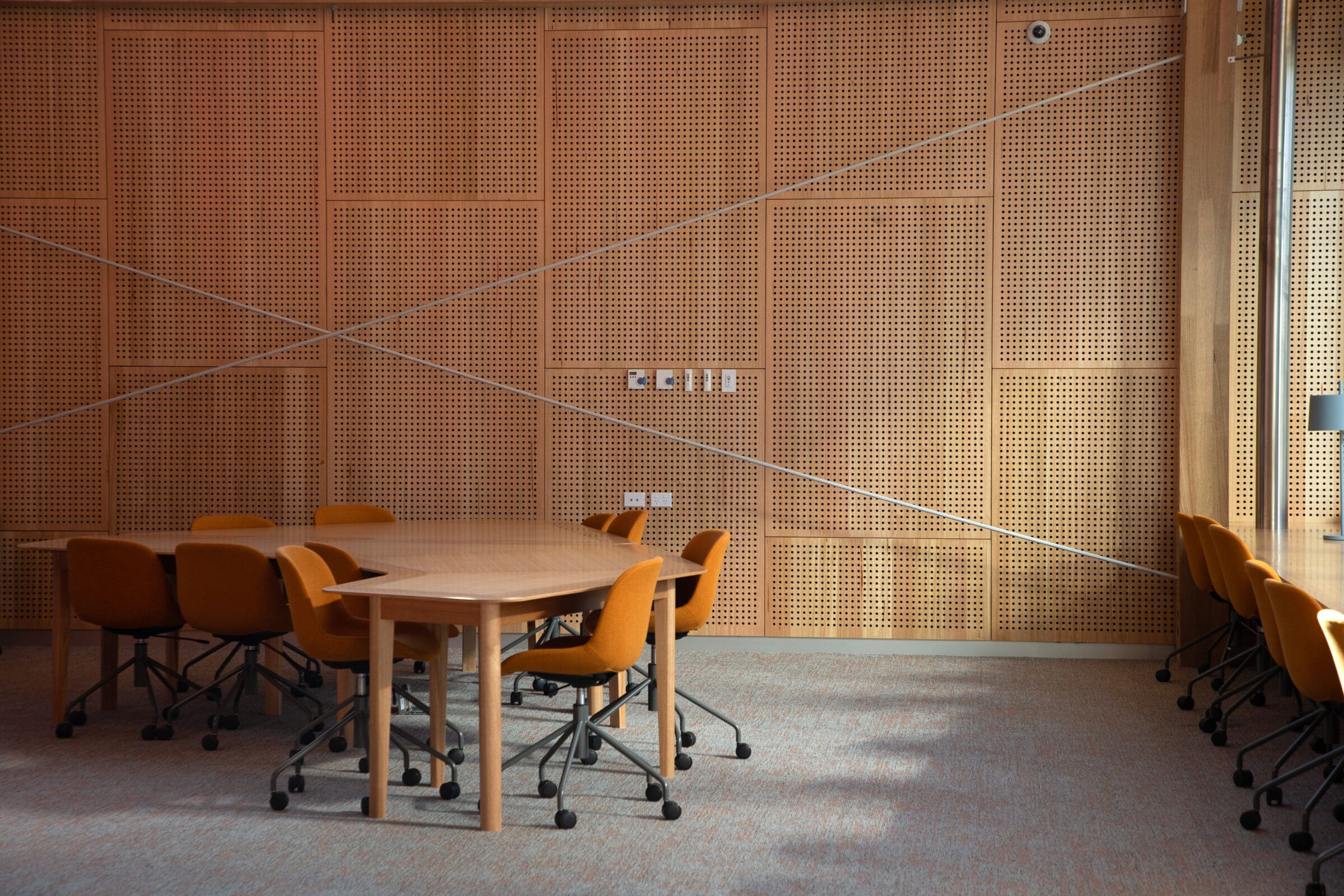
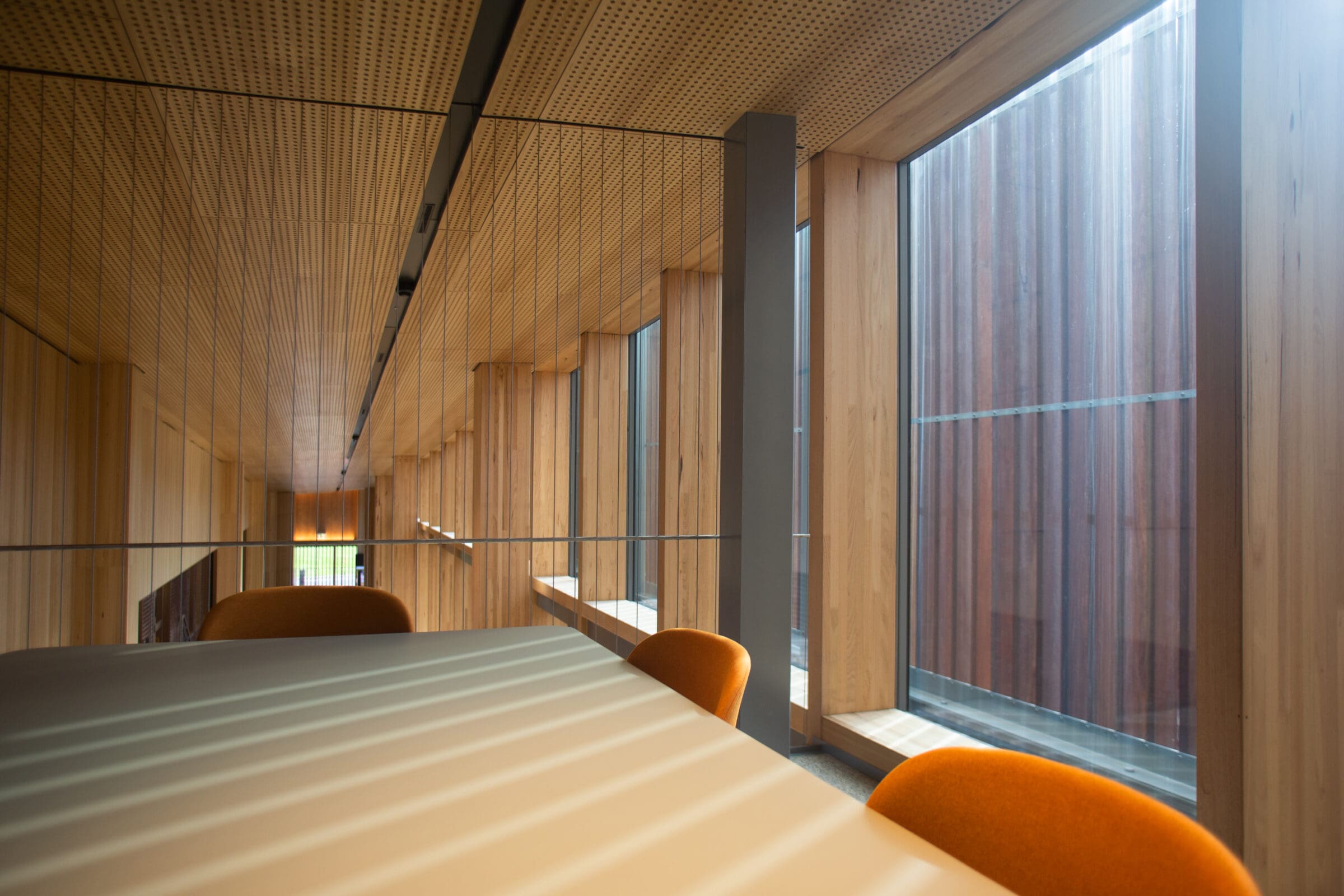
Where this alignment doesn’t happen, projects can face redesigns, delays, or missed opportunities to use local materials. The St Lukes Health headquarters in Launceston – the largest mass timber building in Tasmania – has been widely recognised for its design and ambition. But delivering it proved to be a learning curve for everyone involved.
I think in hindsight, had we been aware of what was available, we would have moved earlier in the process to secure the timber,” says St Luke’s Board Member Martin Rees. “Even back at the design stage, is probably when you would start to say, well, this is timber – what kind of timber? Where am I going to get it from?
These challenges point less to a limitation of timber itself, and more to a mismatch between how timber needs to be delivered and how projects are typically structured.

The experience gap: building industry confidence
Alongside the realities of a natural-material supply chain, the research highlights a broader issue of experience and capability across the construction sector.
In more mature markets such as Europe and North America, the mass timber construction sector has evolved into a highly coordinated and sophisticated ecosystem., underpinned by deep supply chain integration, standardised design approaches, and a strong understanding of timber’s material characteristics. Architects, engineers, and suppliers work in close alignment, with early-stage collaboration enabling more accurate specification, efficient procurement, and fewer downstream adjustments. This level of maturity reduces uncertainty and unlocks the full benefits of mass timber, from speed to sustainability.
In Australia, mass timber adoption remains relatively new but the market is evolving rapidly, with local practitioners – from architects and engineers to builders, installers, manufacturers and trades – actively building their knowledge and skills. In some areas, we are adopting international best practices; in others, we are leading them – such as with homegrown, world-class design software like CLT Toolbox.
Mass timber design and construction requires a different process than a business-as-usual (concrete and steel) building. The differences become most visible during the design and construction phases. Architects may develop designs without early input from suppliers, only to find that local manufacturing capabilities haven’t aligned to meet the specifications. This can lead to redesigns, delays and additional costs, which are avoidable with early consultation. It’s a learning that once adopted will streamline mass timber construction and reward designers with efficiencies.

For builders and contractors, unfamiliarity with mass timber products can also present practical challenges. Managing moisture, ensuring weather protection, and understanding prefabricated timber construction methods all require specific knowledge and experience that is still developing locally. In some cases, projects have relied on specialist installers from interstate to reduce delivery risk. Expertise is readily available, however, accessed through the Expert Timber helpline.
Over time, however, experience can build quickly. As more projects are delivered, knowledge is shared across teams, and capability begins to strengthen. The St Luke’s project, for example, contributed to building local capability through the transfer of skills into the Tasmanian construction workforce.
Once we’d sourced the product and brought it in, there were great learnings from the building company, and that transferred to them from experts who came in from Melbourne and Brisbane, having done other jobs there,” explains Martin Rees. “So that skill set is now in Tasmania. We have a building company here in the state that has that skill set because it was transferred to their people. That’s pretty valuable.

Compliance, insurance and perceived risk
A third element to navigate is compliance, particularly around fire safety and insurance. While mass timber systems are designed to perform predictably in fire conditions, perceptions have not always kept pace with evidence.
Engineered timber products such as cross-laminated timber (CLT), for example, char at a known, controlled rate, maintaining structural integrity for extended periods. However, in Australia, mass timber projects – particularly those seeking to expose timber as a design feature – can face more complex approval pathways, often falling outside prescriptive Deemed-to-Satisfy provisions and requiring a project – specific Performance Solution. This necessitates additional input from a fire engineer and can introduce extra cost, time and uncertainty into the process.
These challenges extend into the insurance market, where perceptions of fire risk continue to influence underwriting decisions.
St Luke’s experienced this firsthand.
When we first started, we had to get insurance in place. But we couldn’t get insurers to underwrite this building,” says Martin Rees. “Initially they said our timber was going to burn down, and we had to prove to them that the charring rate is slower than steel and concrete. Finally, we got it underwritten out of Europe, where there is much greater familiarity with timber, and the actual premium now is lower than a steel and concrete building in Australia.
His experience highlights both the scale of the perception gap and how it can shift when evidence is understood. Over time, these perceptions are beginning to change, particularly as more Australian projects demonstrate timber’s performance.

Moving forward: aligning systems, skills and expectations
The research makes clear that these barriers are not insurmountable. Rather, they reflect an industry in transition, where systems, knowledge and expectations are still catching up with the exciting opportunities that timber presents.
Several pathways are already emerging.
Earlier and more integrated project engagement – bringing suppliers, engineers and contractors into the design process – can help align expectations and reduce risk. Improved access to information and expertise is also critical. Connecting with organisations and specialists who understand timber systems can help project teams navigate unfamiliar territory.
There is also a role for policy and procurement. International examples show how regulation can accelerate adoption by setting clear expectations for timber use, particularly where carbon outcomes are a priority.
I’d love to see Australia do something similar to Northern Europe,” says Martin Rees. “Once regulation drives the start of using things like timber, then over time it becomes just a natural progression.
Share this Article