

Building with timber: insights from Tasmania’s commercial construction sector
Timber is gaining momentum as a renewable, low-carbon building material, with projects around the world demonstrating its capacity to reduce emissions while creating high-quality, human-centred spaces.
Its rise is closely tied to a broader shift within the construction sector. According to the UN Environment Program, the sector accounts for 37% of global emissions, and as pressure to decarbonise intensifies, attention is increasingly turning to materials that can both lower and store carbon.
In many countries, this shift is already a matter of policy. Finland has set an ambitious target for 45% of new public buildings to be timber-based by 2025, while Slovenia has mandated a 30% wood quota by law. Yet, in Australia, despite significant plantation resources and a well-established forestry industry, timber remains the ‘trailblazing’ choice rather than the standard for commercial projects.
To understand why – and to start bridging that gap – the Centre for Sustainable Architecture with Wood (CSAW) recently conducted a targeted review of commercial timber construction in Tasmania.

Commissioned by the Tasmanian Forestry Hub, the research examined six of Tasmania’s most innovative recent commercial timber buildings to uncover the perceived barriers and, more importantly, the insights architects and clients need to overcome them.
As Dr Louise Wallis, CSAW’s Deputy Director, explains, the aim was to take a “360 view” of the process: “Where were those points where it became a challenge? Where were those opportunities that we could potentially do something to remedy it, so that we could get more Tasmanian timber in buildings?”
The findings show that while structural, regulatory and supply chain challenges continue to influence what is delivered, there is strong interest in using timber – especially among clients and architects – and clear opportunities to expand its use, underpinned by tangible environmental and performance benefits.

The path to capability: navigating risk and systems
One of the most consistent themes in the research is that using timber in commercial buildings requires a departure from ‘business as usual’. For many in the Australian industry, structural timber applications are still relatively new, bringing a perceived complexity compared to more established materials like steel and concrete.
As Dr Wallis notes, “The challenge is that while we understand timber really well in homes, we’re now trying to use it in the structure and cladding of commercial buildings. That creates a lot more compliance issues: whether you can get insurance, whether it’s fire proofed, how it works with moisture.”
The research identified that navigating these early-stage uncertainties is key to moving timber from a bespoke choice to a mainstream solution. For mass timber construction (MTC), this includes specialist expertise at the design stage and engaging with the supply chain early.
However, as the industry moves away from traditional project-based models toward a more product-based process – where standardised components are designed for precision assembly – these challenges become opportunities for greater efficiency, improved quality control, and reduced on-site waste.

The competitive edge: performance and connection to place
Despite the learning curve, the research highlights strong and growing opportunities for timber in Tasmania’s commercial construction.
There is clear demand. The study found “a drive towards using timber… among architects and clients with feasible budgets,” with all participants agreeing there is potential to increase the use of locally produced timber products. The material’s environmental credentials also contribute to this interest. Around 50% of the dry weight of timber is sequestered carbon, meaning that every timber beam and panel represents a tangible step towards decarbonisation.
Buildings themselves create about 40% of our carbon emissions,” Dr Wallis says. “If we can make buildings perform better, and we can use a resource which we can grow, there are huge benefits in that.

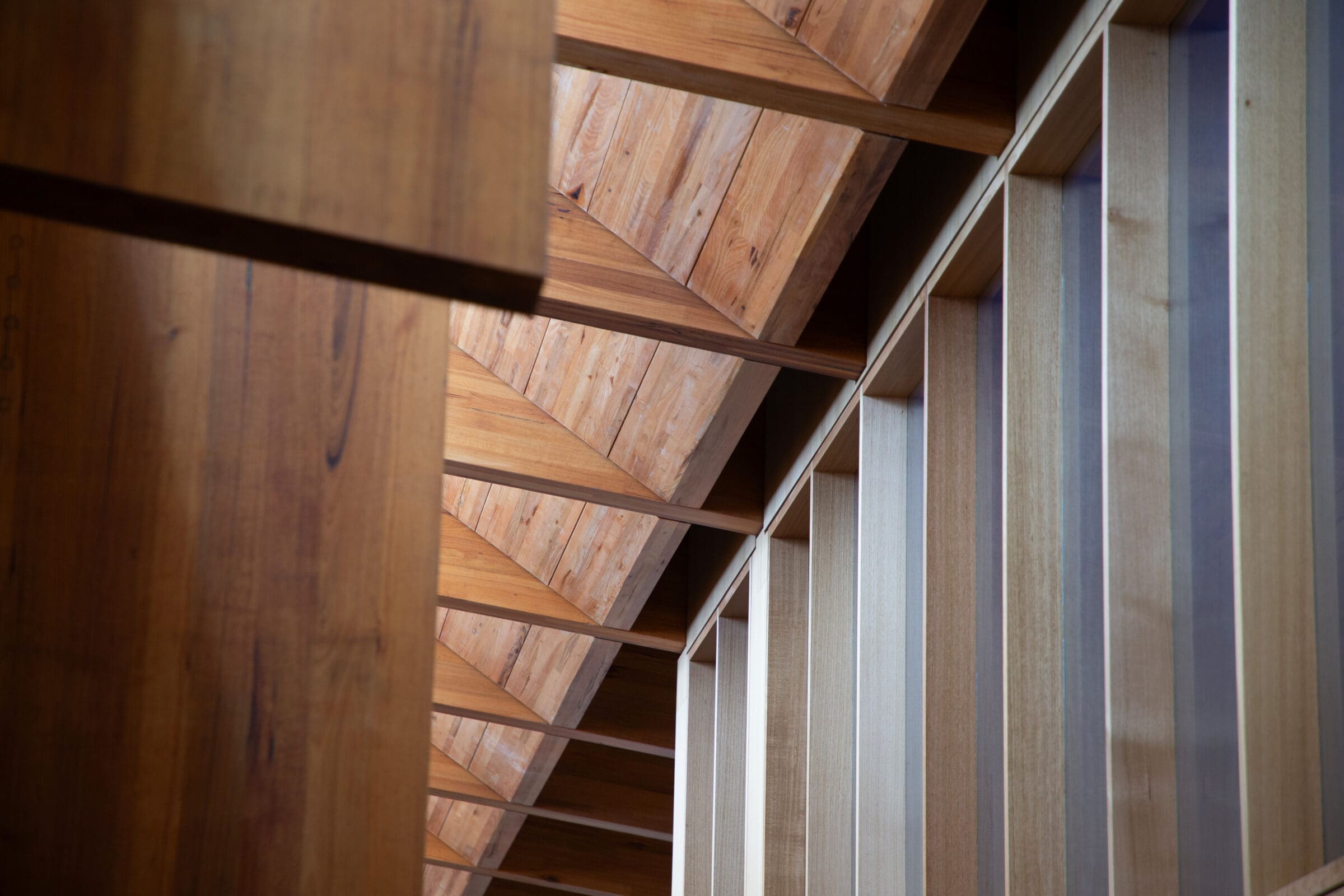
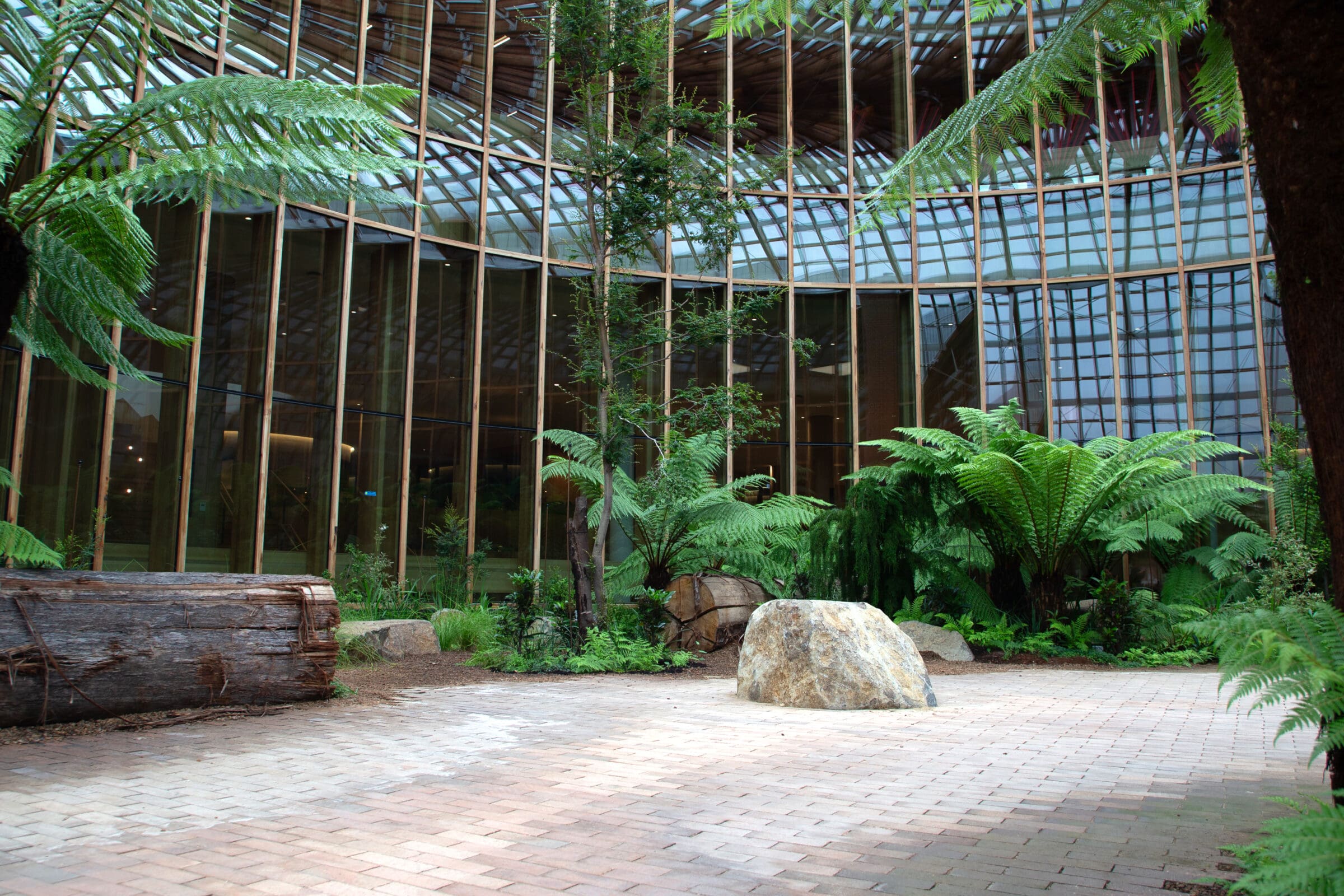
Timber also offers functional and experiential advantages. It performs well in many applications, is well suited to prefabrication, and supports efficient installation. At the same time, it contributes to biophilic design and positive user experiences.
What I love about timber is the warmth, the feel of it,” Dr Wallis reflects. “There’s something about it that you just want to touch. We associate it with our natural environment.
Importantly, timber can also help express local identity and support regional economies. Using Tasmanian-grown products strengthens local supply chains and connects buildings to place. As Dr Wallis notes, “there’d be nothing more wonderful than actually growing and using the materials in our state.”
At the same time, the research acknowledges that timber operates within a global market. Imported products can offer cost and consistency advantages, reinforcing the need for local products to remain competitive on price, performance and certification.

Building confidence and expertise
To realise these opportunities, the CSAW report identifies a series of practical initiatives aimed at de-risking the process for architects and builders. A central theme is the need for more integrated coordination across the supply chain – closing the gap between growers, processors, manufacturers, and the design team.
Education is the primary tool for this transition. The report recommends developing guides, seminars, workshops and short courses, alongside improving public awareness of timber products and suppliers. Providing up-to-date, centralised information on industry capabilities and product availability is another priority.
We need to get more information out there,” Dr Wallis says. “We need to have the examples of the buildings to build that confidence, and we need to be sharing the practices instead of holding them tight. We’ve now had six buildings done in Tasmania, involving three major construction companies. If we continue to build confidence and expertise as we go, then we’ll be able to get to critical mass.
Promoting successful project case studies is particularly important. As more timber buildings are delivered in Tasmania, they help build industry knowledge, demonstrate performance, and reduce perceived risk. Over time, this can support a shift from first-of-a-kind projects to more routine use.
Policy settings also have a role to play, including procurement policies, potential incentives for timber-rich buildings and updates to building codes and standards to better support timber construction.

A key catalyst: the role of the client
Across all findings, one insight stands out: the influence of the client.
The research found that in almost every successful project, “it was the client or architect who drove the use of the timber,” with the client emerging as the most significant decision-maker in whether timber is ultimately used.
If they want a product, everyone else will listen,” Dr Wallis explains. “They won’t go to what is their common solution.
This highlights an important pathway for change. Alongside technical improvements and policy reform, influencing client vision – through information, examples and demonstrated benefits – may be one of the most effective ways to increase the use of Tasmanian timber in commercial buildings.

As confidence grows, so too does the potential for timber to play a larger role in shaping Tasmania’s built environment.
The research makes clear that the barriers are not insurmountable, and that addressing them could unlock significant benefits. International experience shows that with the right mix of policy support, industry capability and market demand, timber can move from a bespoke choice to a mainstream solution.
Increasing the use of locally grown timber offers a pathway to support regional industry, reduce emissions, and deliver buildings that are not only functional, but deeply connected to place.
In that sense, the question is no longer whether timber can play a greater role in commercial construction, but how quickly the sector can build the confidence and capability to realise its potential.
Share this Article