

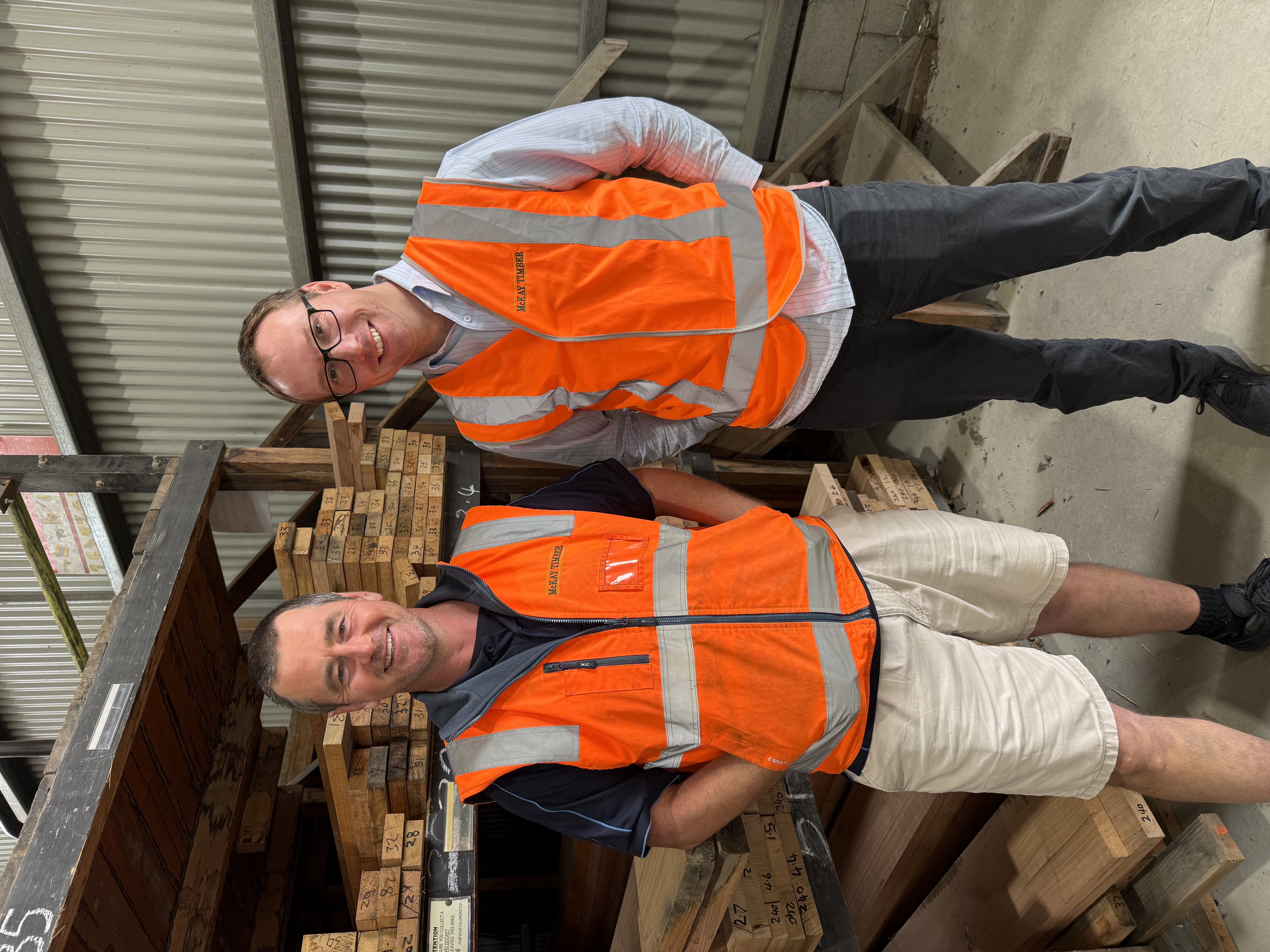
SPECIFY TIMBER WITH SOMEONE WHO UNDERSTANDS BOTH SIDES OF THE DRAWING
Tim Kleywegt brings something rare to timber specification: an architectural understanding with a technical focus, combined with two decades of hands-on experience in the Tasmanian Timber Industry. As McKay Timber’s Engineered Products Engagement Specialist & Frame and Truss Detailer, Tim is ready to help you specify timber with confidence.

The Challenge of Specifying Timber
Specifying timber shouldn’t feel like taking a risk. However, for many architects, the process of selecting species, grades, profiles and finishes and then trusting what arrives on site can be a mystery. Suppliers who understand design intent, provide clear lead times, and accurate product samples become trusted supply chain partners.
McKay Timber is a trusted supply chain partner for many architects. The appointment of Tim Kleywegt as their dedicated point of contact for architects and designers across Australia shows their commitment to supporting accurate specification. Tim bridges the gap between the mill and the architectural office.

Specification Support When Timber is Part of Your Vision
This combination is what makes Tim useful, he understands the design intent behind specification, not just the product being ordered. He knows what information architects need to find quickly, what questions matter at each stage, and what happens on the manufacturing side when a specification changes mid-project.
Tim is available to work through timber specification from early in the design process, all the way through to the final project stages. Based at McKay Timber in Tasmania, he combines over two decades of hands-on experience in the timber and truss industry, including working with glue-laminated products, prefabrication, and the National Construction Code. He holds a Master of Architecture qualification from the University of Tasmania, earned while continuing to work in the industry, and spent five years in Hobart architectural practices before joining McKay’s.
“I’ll seek to understand an architect’s design intent, explore options and solutions and if I don’t know an answer, I’ll find out,” Tim says. “As an Architectural Graduate, I understand what you want- to find information quickly and easily.”
Getting Timber Specification Right
Drawing on Tim’s experience in both architecture and the timber industry, Tim shared some practical guidance for architects specifying timber.
Engage McKay Timber early in the design process: Understanding what’s locally achievable, in terms of species, sizes, profiles, and lead times is important before you commit to a design direction. The earlier the supplier is involved, the more options are available.
Request samples and test your finishes: Timber behaves differently under different oils, stains, and varnishes. Don’t rely on photos or catalogue images alone. Test your preferred finish on physical samples before specifying.
Design for timber’s natural character: Moisture movement, span requirements and edge detailing all need to be considered in the design. Timber is not a perfectly consistent product, and that’s part of its appeal. Overly rigid specifications tend to generate waste without improving the outcome.
Build lead times into your programme: Thicker timber sections can take up to two years to dry properly. McKay’s can plan production around your project schedule, but they need to know early.
Specify local & certified timber: Where possible, locally source Tasmanian timber, as it is traceable, certified sustainable, and backed by a supplier who can answer your questions.

What McKay Timber Can Offer Your Project
McKay Timber’s core business is Tasmanian Oak, and their range is extensive. Whether your project calls for structural framing, external cladding, interior fit-out or engineered timber products, McKay’s manufactures and stocks a wide variety of products.
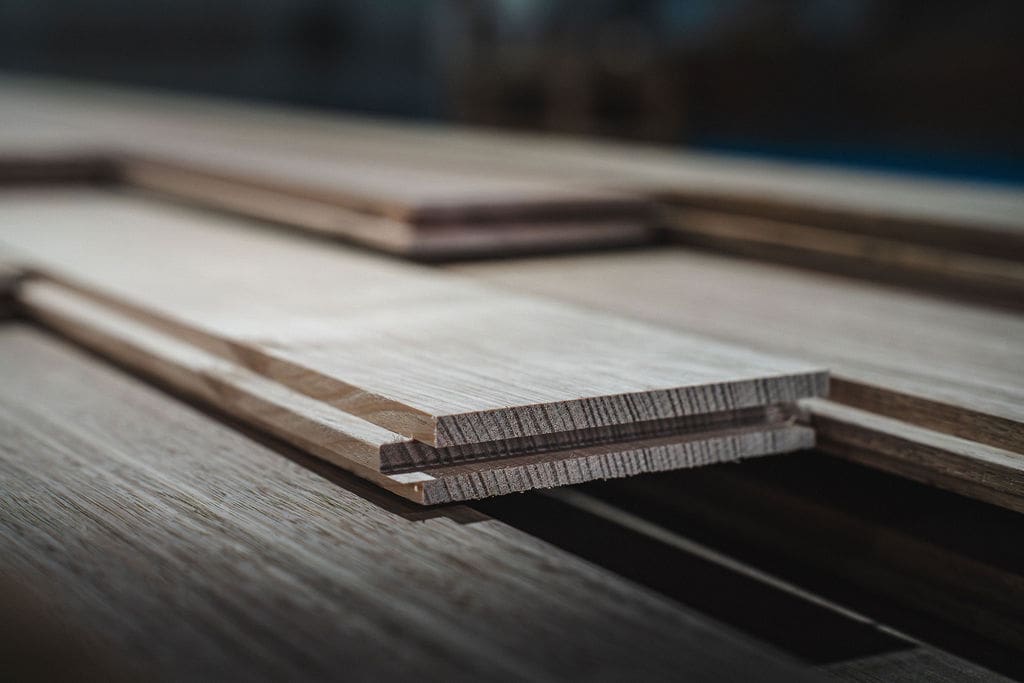
Interior Fit Out: Dressed flooring, lining boards, architraves, and edge mouldings in Tasmanian Oak.
External Cladding: Weatherboards in a variety of profiles.
Structural Framing: F17 grade hardwood for wall studs, plates lintels, rafters and beams.
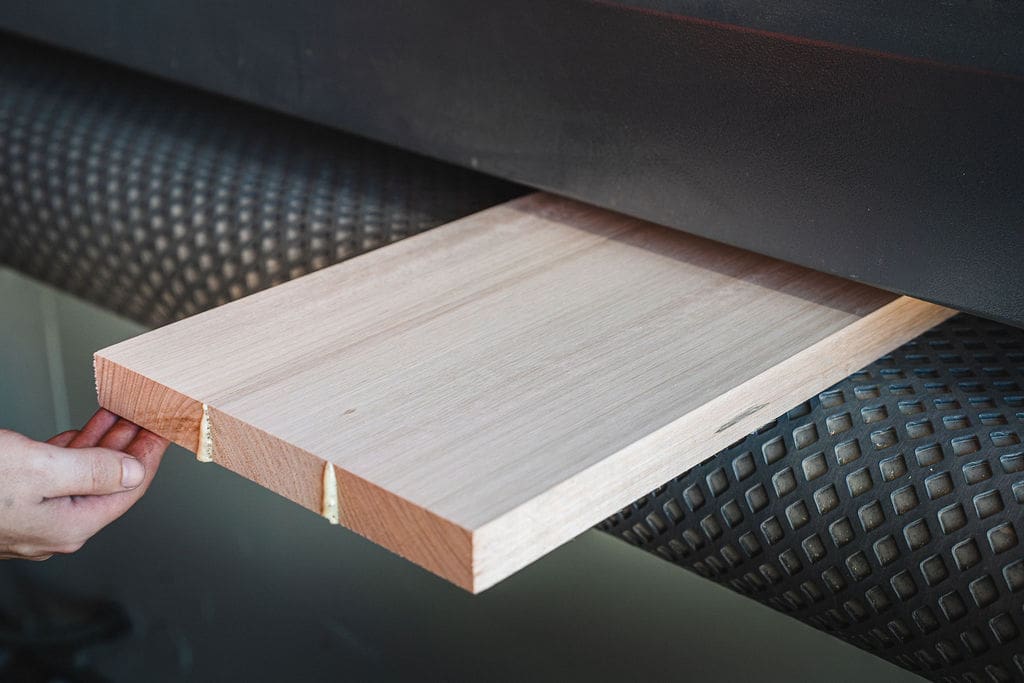
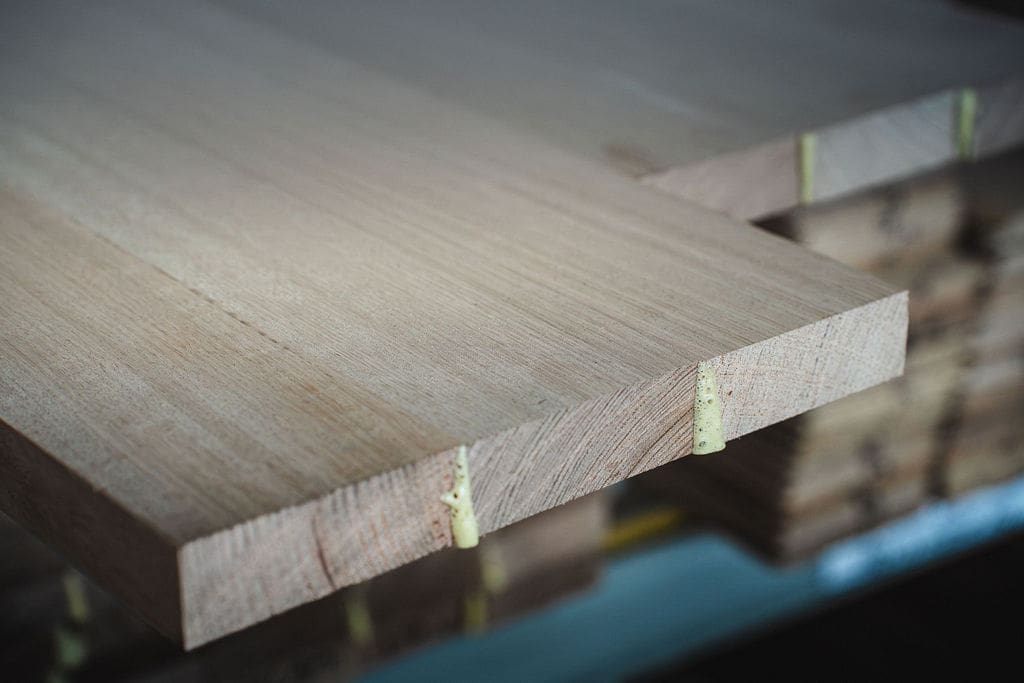
Engineered Timber: Laminated bench-tops, stair treads and stringers. Engineered flooring, which combines Tasmanian Oak veneer with a plantation timber, delivering the aesthetic of Tasmanian Oak at a more accessible price point.
Prefabricated frames and trusses: Produced in Tas Oak or Radiata Pine, we offer exposed truss options where the structure is part of the design.

Eighty Years of Tasmanian Oak
McKay Timber is a family-owned business now in its fourth generation. The core of what they do is manufacturing and selling Tasmanian Oak, this hasn’t changed in 80 years. Their ongoing commitment to staying relevant to contemporary architecture requires a genuine dialogue with the people who specify their products.
“With inputs from designers and architects we can make sure that the products we produce will still be relevant now and into the future,” Tim says.
“We’d like to continue making Tasmanian Oak products, with input from designers, to make sure we can continue to produce what they’re after.”
Tim’s role is a direct expression of that commitment, an investment in making McKay’s a valuable partner to architects.

Talk to Tim About Your Next Timber Project
Whether you’re early in design and want to understand what McKay’s can offer, working through a specification and need technical guidance, sourcing timber samples and test finishes, or dealing with a specific challenge around timber selection, Tim is eager to support you.
Share this Article