


The Science of Biodiversity: Why Tasmania’s Native Forests Are Thriving Under Sustainable Management
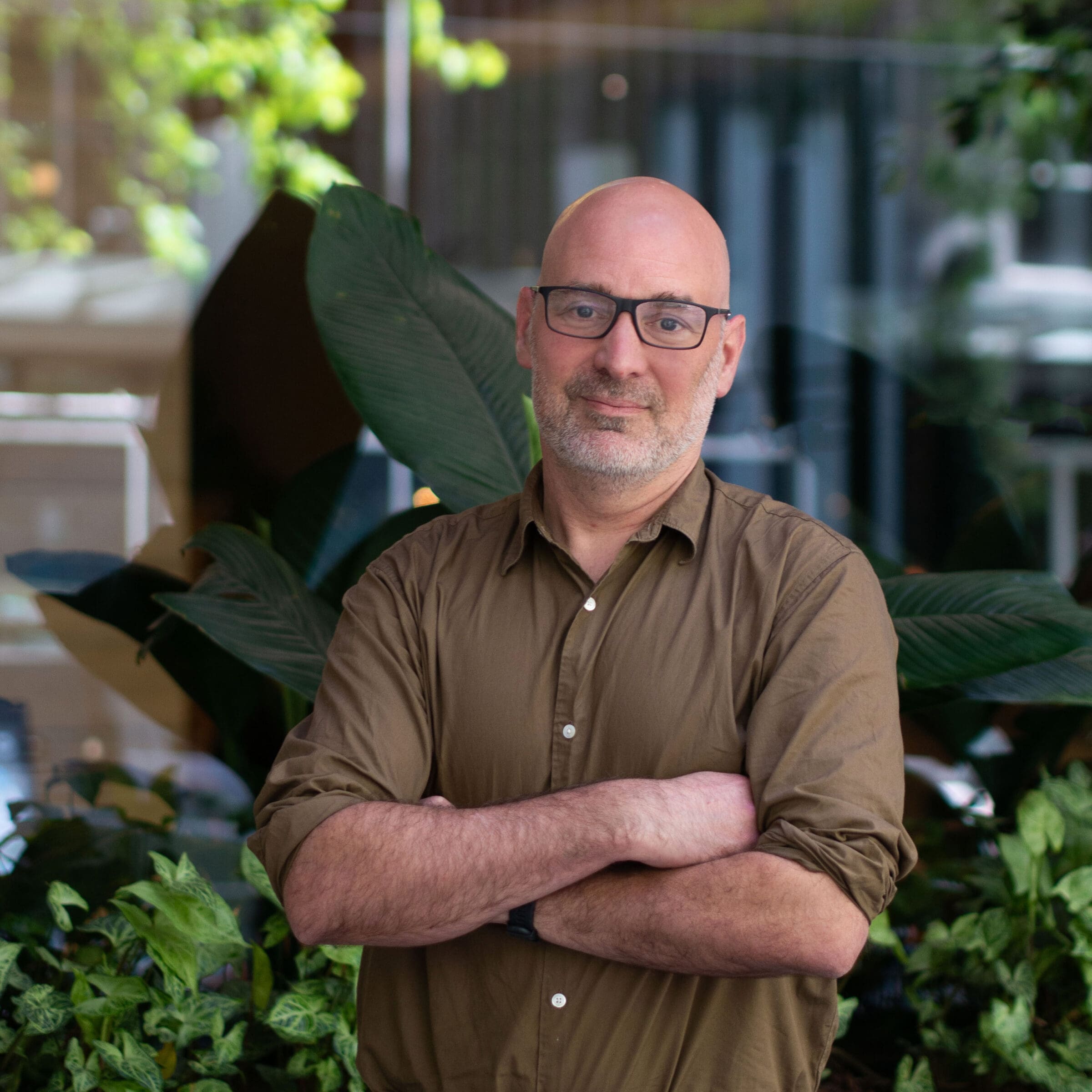
When Dr Marie Yee arrived in Tasmania over two decades ago, she came with an ambition to contribute to biodiversity conservation through applied science, to make a positive impact from within the industry instead of hurling stones from the outside. With a science degree and a deep passion for ecological sustainability, she was certain her research would reveal the need for immediate forestry reform in Tasmania.
“I would admit that I was fairly zealous and had sort of an arrogance that I knew best,” Marie reflects candidly. “I’d done science, I’d tell people the importance and expose the truth, that kind of attitude.”
Marie wanted to give recommendations about the importance of retention of forests, areas of wildlife, habitat corridors, retaining large trees and logs. But when she came here and researched the actual practices that were happening in Tasmania, she was surprised.
I realised they were very progressive, the people who put those practices in place were scientists who worked within the industry, within the regulator, like the Forest Practices Board and Authority at the time. And I thought, oh, this is a really progressive place to work, and that’s why I sought to get a job with Forestry Tasmania [now STT], after I finished my PhD.
Today, as Senior Conservation Planner for Sustainable Timber Tasmania (STT) and ecologist, Marie’s story offers a compelling scientific perspective on one of Tasmania’s most debated industries, one that architects and timber specifiers need to understand when making material choices.
Beetles, powerful indicators of forest health
Marie’s PhD focused on an often overlooked component of forest ecosystems: beetles living in rotting logs. These hidden creatures are powerful indicators of forest health and represent an extraordinarily biodiverse group of species.
Her research compared forests that had been clear-felled in the 1960s and ’70s with mature old-growth forests. The results surprised even her.
“I found that the species richness, so the number of species, was very on par, the same,” Marie explains. “The diversity is still there. There are some slight differences in the species community because there are some species that like old forests, some species that like young forests, and some species that don’t care.”

Understanding forest succession, that forests need different age classes for different species, helps to explain why sustainably managed forests do not lead to a decline in biodiversity. The proof is in the results.
In our forest, we do have a lot of threatened species in our managed landscape, and that’s because biodiversity has come back into those areas.
Learning from Europe’s Mistakes
To put Tasmania’s forestry in perspective, Marie points to Northern Europe, where 400 to 500 years of forest management have resulted in hundreds of deadwood beetle species being listed as threatened.
“They just cleaned up all that deadwood and they’ve used it for firewood, and they thought managed healthy, clean forests were good for biodiversity,” Marie explains. “But it wasn’t, and now their practices are to actually recreate all that deadwood to the point where some of the forests, they have to actually cut trees down at mid height, let them become dead stags in order to recreate old habitat.”
Tasmania’s forestry industry, just over a century old, has the opportunity to avoid these mistakes. The research Marie conducted revealed that with proper retention practices, biodiversity thrives.
Marie is grateful and acknowledges the pioneer work of the environmental movement. “The early forest activism in 80s and 90s, plus a growing global consciousness regarding biodiversity loss, were the catalyst for policy reform and significant improvements in forestry. We now have greater accountability and transparency on how we manage our forests, which is a good thing. We also have a world leading and progressive forest practices system because of this”.
Managing Biodiversity at Scale
In her current role, Marie takes a landscape-scale approach to conservation planning across Tasmania’s state forests. This bird’s-eye view ensures the maintenance of heterogeneity, the patchwork of multiple age classes that biodiversity needs to flourish.
We maintain corridors of reserves to allow for the older-dependent species that like older forests to be able to move across the landscape, she explains.
Modern harvest planning incorporates extensive data layers in geographical information systems, ensuring planners have comprehensive information about habitat values before any trees are felled. Patches identified as important habitat for threatened species are excluded from harvest operations entirely.

Acoustic Monitoring: Listening to the Forest
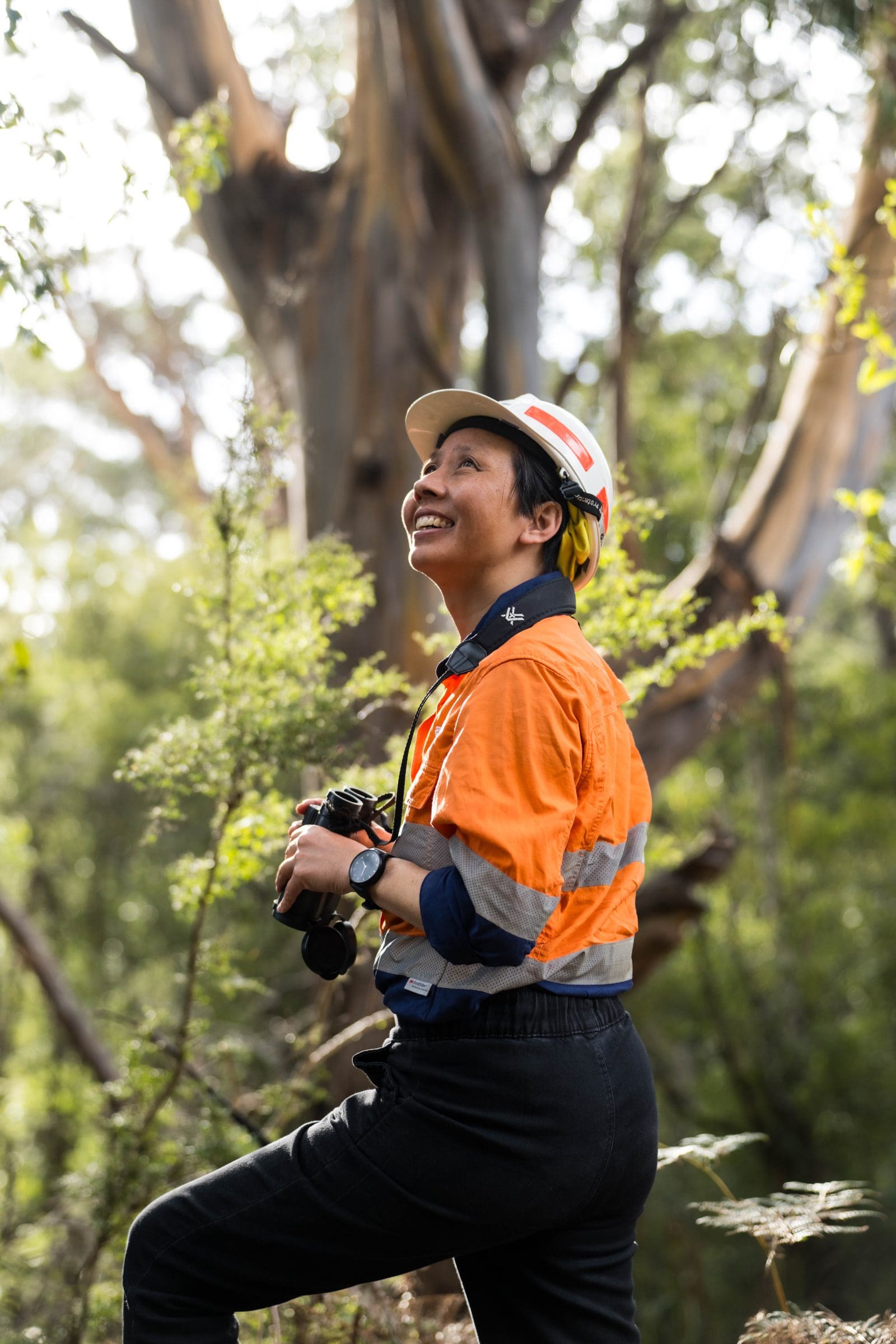
One of Marie’s key projects involves deploying acoustic monitoring across harvest areas, particularly for species like masked owls and swift parrots. This pre-harvest monitoring provides crucial data that feeds into planning decisions.
“We’ll do our field surveys, we’ll do our acoustic monitoring. We’ll process that and provide that information to the regions,” Marie says. This ensures that any areas proving important for threatened species can be considered and protected before harvest operations begin.

The Alternative to Native Logging
When asked about the debate over native forestry’s future in Tasmania, Marie reframes the question:
What’s the alternative? If the alternative is no native forestry, what does that look like? And does biodiversity improve with that? I would argue, I don’t think it would necessarily.
She points to major disturbance factors beyond human management, particularly large landscape bushfires. “Once you have one of those go through, which affects a large area in such a devastating way, that will have significant impacts on our biodiversity and the ability for the forest to recover.”
Native forestry provides more than timber. It provides a framework for active forest management, including fire prevention and response capabilities that help protect biodiversity from catastrophic events.
Importing Timber
For Marie, the environmental case for using locally sourced Tasmanian timber over imports is clear and compelling.
What’s the impact of transitioning towards other types of materials, whether it’s concrete or steel? What are the impacts if we don’t do native forestry here? We will be importing timber from elsewhere. Where does that come from and what impact, and flow-on effects, does that have on their biodiversity?


While other countries may have certification systems, Marie notes these standards are set to local conditions and development stages. “Our standards would be so much harder to achieve. That’s what applies to our local situation.”
Tasmania’s Forest Practices System, backed by the Forest Practices Authority and continuous scientific input, represents one of the most rigorous regulatory frameworks in the world.
We have a really good forest practices system, a lot of good experts who provide input into improving the way we do things. There’s always a framework of adaptive management and continuous improvement.
A Personal Decision
Marie’s journey from protestor to conservation planner hasn’t just informed her professional work, it’s influenced her personal choices too.

“I do not have an issue with buying Tasmanian timber. In fact, I would choose it and do so when it’s available. I have a deck made out of Celery Top Pine,” she says, before adding:
It doesn’t make any sense to me. If you care for the environment, care for biodiversity, care for this planet, why would you import timber from other countries and use that over Tasmanian timber? I just can’t understand that.
Beyond the Rhetoric
Marie acknowledges the emotional appeal of forest conservation campaigns but urges people to look beyond simple slogans.
“I understand there is a lot of concern in the world about the climate, the environment, the uncertainty as to what we are facing for future generations. I understand where that concern comes from,” she says. “Once someone appeals to that concern or to that fear of yours, you start to believe in anything that’s being said.”
The reality, she argues, is far more nuanced.
That’s where the politics comes in because they basically say you’re either a defender or you’re a plunderer. And that’s furthest from the truth because, as my experience working with the people, they care about the trees and the forest and all the animals and plants that live in it too.
She finds it particularly painful when foresters are portrayed as environmental villains. “It’s very upsetting to be called a plunderer when you know that the foresters of today are growing the timber resource for future generations as the previous foresters of the sixties and seventies grew it for the generation of today.”
“Be careful what you wish for. With any major decision that might be grounded in ideology or the rhetoric out there or the popular position, there’s always these perverse outcomes that are unintended that will occur.”
I think native forestry in Tasmania is done well,” Marie states firmly. “I think it would be a really sad point in time if that was to cease.
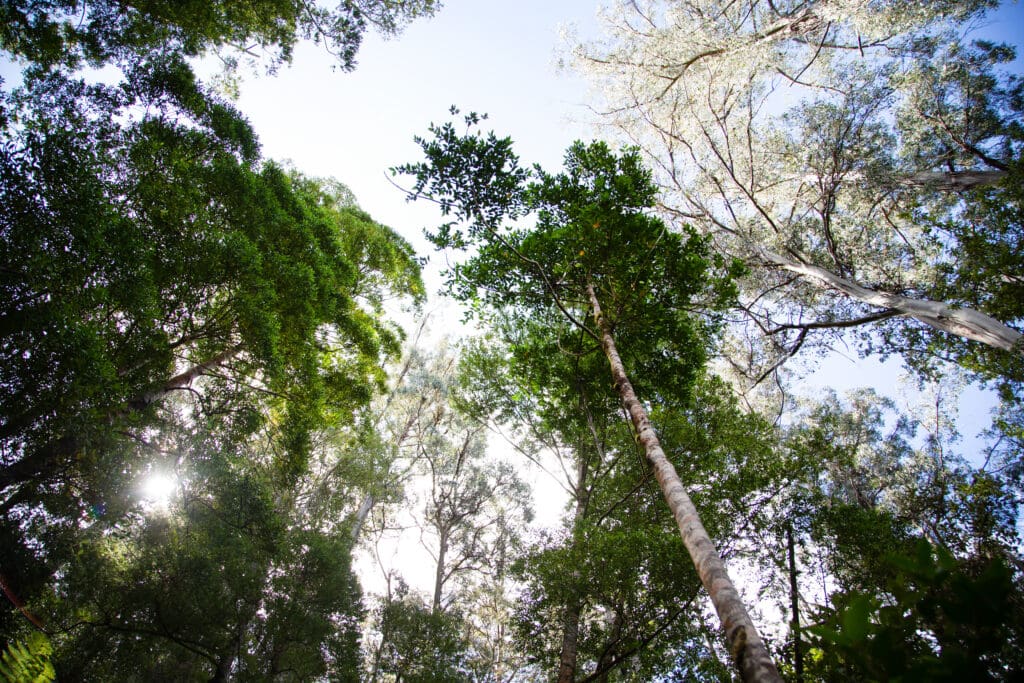
Marie’s scientific research demonstrates that Tasmania’s native forests, when managed under the state’s rigorous regulatory framework, maintain rich biodiversity across the landscape. The acoustic monitoring, pre-harvest surveys, retention practices, and landscape-scale planning all work together to ensure species have the habitat they need while sustainable timber harvesting continues.
We do need to work towards dealing with climate change and the major natural disturbance of bushfire, and how we best do that,” Marie concludes. “The business model that we have with native forestry and our firefighting team and all the resources of road access and being out there looking after the forest, maintaining its health, it works. And that includes native forestry as part of that business model.
To hear the full conversation with Marie, including her evolution from protestor to being a leader in Tasmania’s forest management, to information on Wedgetail Eagles, Swift Parrots, citizen scientists and more, listen here: The Original Thinkers Podcast