


Understanding Tasmanian Oak Prime and Classic Grades: A Guide for Architects and Specifiers
When specifying Tasmanian Oak for your projects, understanding timber grading is essential for achieving your desired aesthetic outcome. However, it’s crucial to recognise what grades do and don’t represent in terms of product quality and performance.
What Timber Grades Actually Mean
A grade is fundamentally a classification system that groups timber with similar visual characteristics. This allows you, as specifiers, to clearly communicate your design intent and ensure consistency across a project. Grades enable you to specify a particular aesthetic, whether that’s a cleaner, more uniform appearance or a feature-rich, characterful look.
Importantly, grades do not define product quality or influence fitness for purpose. This is a critical distinction that affects how you approach specification.


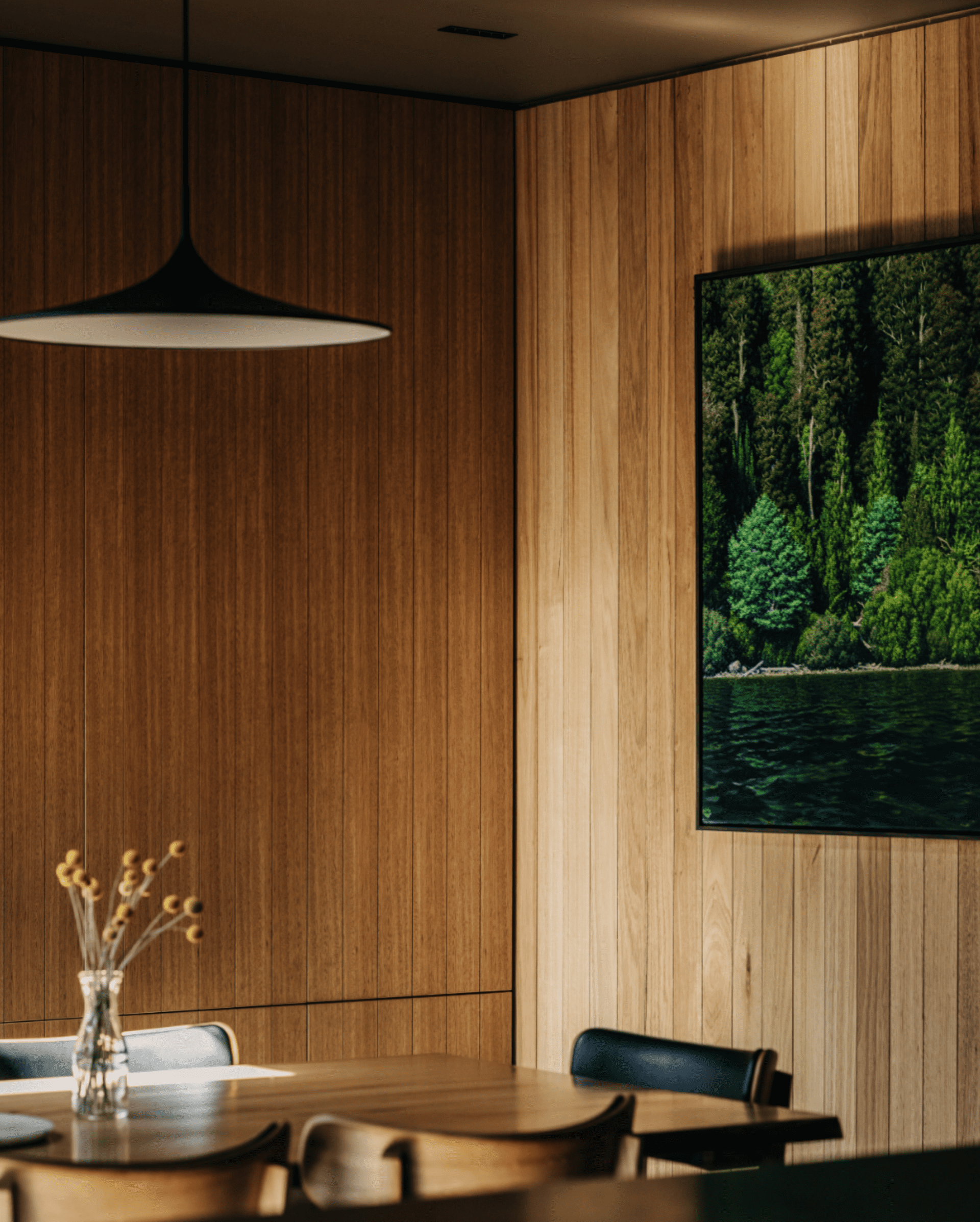
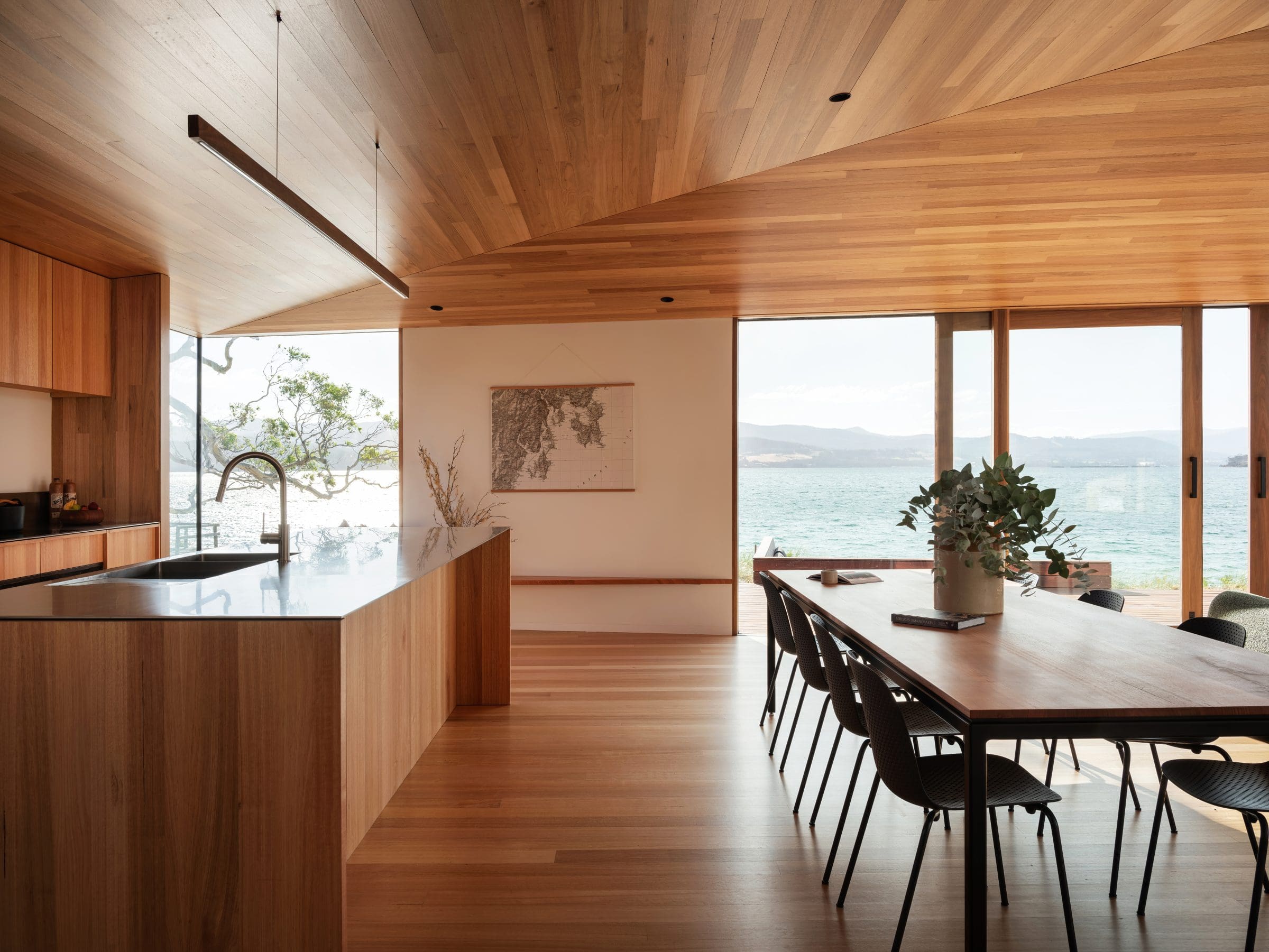
Images: Classic Grade Tasmanian Oak at Pumphouse Point, Images by Adam Gibson
The Aesthetic Decision, Not Structural
All Tasmanian Oak flooring, regardless of grade, must meet the same stringent performance requirements under AS2796.2. Whether you specify Prime or Classic grade, the material will deliver identical structural performance, including:
- Moisture content standards
- Machining tolerances
- General form requirements (controlling bow, twist, and spring)
- Hardness, stability and durability
- Resistance to service conditions
The difference between grades is purely visual. Both Prime and Classic grades are machined, finished, and packaged to the highest quality standards, with internal and external auditing by the Centre for Sustainable Architecture with Wood at the University of Tasmania (CSAW).
All 19mm flooring installed over joists and battens is specified as structural; compliance with building codes is mandatory regardless of grade. As long as both grades meet or exceed the base values stated in the code, they are equally fit for purpose from a performance perspective.
Prime Grade: Contemporary Minimalism
Prime grade has been developed for projects requiring the warmth and natural beauty of timber with a more consistent, traditional palette. This grade minimises included characteristics while still showcasing the trademark colour variation and grain structures inherent to Tasmanian Oak.
If your design calls for a cleaner, more uniform aesthetic, perhaps for commercial spaces, healthcare facilities, or residential projects with a minimalist design language, Prime grade delivers that refined appearance without compromising on the authentic character of the timber.

Image: Mismatch Prime Tasmanian Timber Veneer by Britton Timber
Classic Grade: Embracing Natural Character
Classic grade provides a constantly higher level of natural features and characteristics, creating a contemporary look that celebrates the timber’s organic beauty. The natural characteristics, combined with fluctuations in grain structures, result in a truly unique product with pronounced visual interest.
This grade includes unlimited hobnail, gum, colour variegation, knots, and black speck, with specific allowances for checks and other natural features. For projects where character, warmth, and individuality are design priorities, such as hospitality venues, feature walls, or residential spaces with a rustic or organic aesthetic, Classic grade offers exceptional visual richness.
The key characteristics you’ll find more prominently in Classic grade include checks (surface width not exceeding 15mm, length not exceeding 75mm), natural colour variegation extending across the face, and various natural features that tell the story of the timber’s growth.
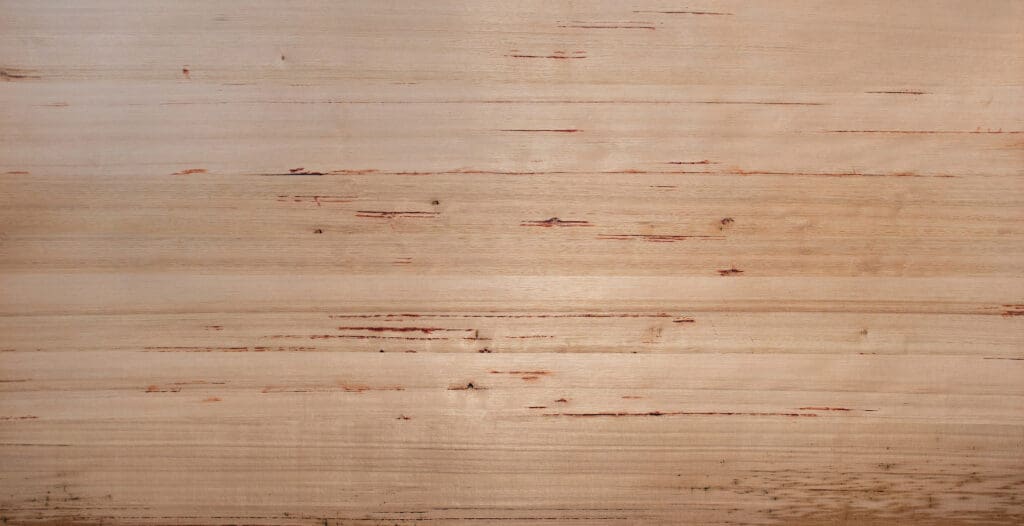
Image: Classic grade Tasmanian Oak, High Feature Veneer by Britton Timber showing gum vein.
Making Your Specification Decision
- Design intent: Does your project call for visual consistency or natural character?
- Project type: Commercial projects may favour Prime grade’s consistency, while residential or hospitality projects might benefit from Classic grade’s warmth
- Client preferences: Traditional aesthetics often align with Prime grade, while contemporary design may embrace Classic grade’s features
Remember that performance requirements remain constant across both grades. Your choice is an aesthetic one that should align with your overall design vision and client expectations.


Images: Left, A sideboard in Classic Grade Tasmanian Oak by Martin Johnson. Right, a vanity in Prime Grade Tasmanian Oak in Nebraska House.
Quality Assurance
All Tasmanian Oak flooring undergoes rigorous quality auditing to ensure compliance with Australian Standards. Out-of-specification material, such as excessive stain, stick marks, and out of specification pinhole, is removed regardless of grade. The quality you receive will be consistent with the grade; with variations within the grade’s limits, only the amount and type of natural features will vary between Prime and Classic grades. The University of Tasmania’s Centre for Sustainable Architecture with Wood (CSAW) works in conjunction with the Tasmanian Timber industry to ensure quality outcomes are consistent to the grade.


Stay Informed
For additional resources and technical specifications, visit:
Understanding the distinction between aesthetic grading and structural performance empowers you to make informed specification decisions that align with both design intent and regulatory requirements. Whether you choose Prime or Classic grade, you’re specifying a product that meets the highest standards of quality and performance while delivering the natural beauty of Tasmanian Oak.