

Webinar: Native + plantation sustainability and supply - why we need both
Native + plantation sustainability and supply – why we need both
Thank you for joining us for the last session of the 2026 Tasmanian Timber webinar series: Native + Plantation Sustainability and Supply – why we need both.
Technical Manager Michael Lee was joined by guest speaker David White, Forest Manager at Sustainable Timber Tasmania, to address one of the industry’s most important conversations: why both native and plantation timber are essential to a sustainable and secure supply chain for generations to come.
David is no stranger to our audience – his episode on the Original Thinkers Podcast was our most listened-to yet. The episode covers seed collection, controlled burning, wildlife preservation and old-growth forest management. David shares insights into native forestry, regeneration and sustainable timber production in Tasmania, while addressing common misconceptions around native forest sustainability.
In this webinar session, attendees learnt about the characteristics of Tasmanian plantation-grown hardwood, such as aesthetics and hardness, as well as available products and suppliers. Together, Mick and David examined how Tasmanian plantation grown hardwood differs from other hardwood species, and why both native and plantation timbers are essential for a local timber supply chain.
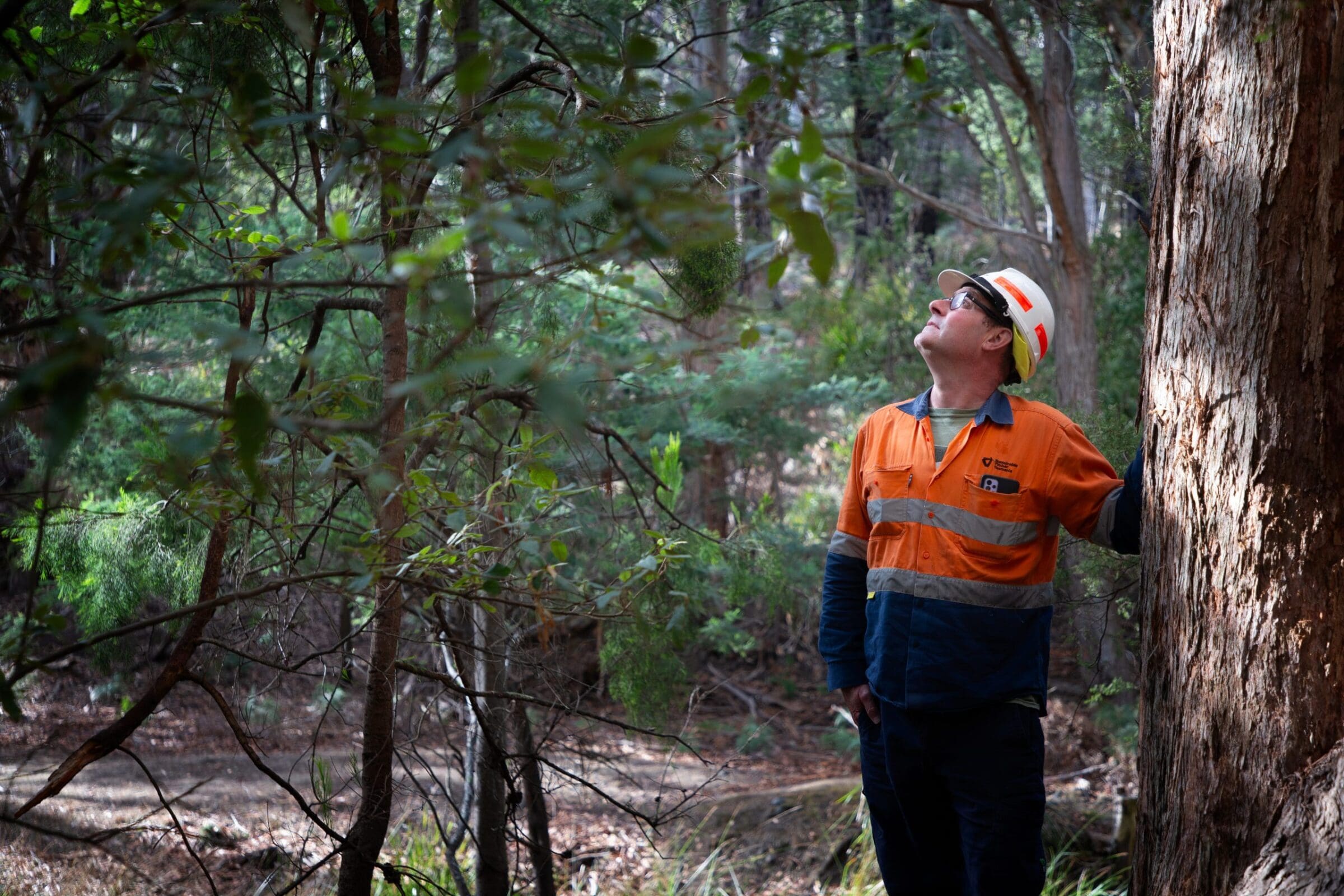
David brought his on-ground perspective as a forest manager, sharing insight into the science, planning, and stewardship behind Tasmania’s sustainable native forest supply – from regeneration practices to long-term forest management.
David explained that timber quality is a direct result of management quality. Sawlog plantations are hand-pruned, thinned at around year 10, and grown for 25–30 years to produce clear, high-quality boards – a longer, more deliberate regime than a fibre plantation, harvested young at around 15 years. Native forest management follows the same principle of patience and sustainable-yield stewardship, but over far longer, generational cycles.
He also set the scene with Tasmania’s forest estate: of the island’s 3.3 million hectares of forest, just 9% (281,000 ha) is plantation, with the rest native forest, including 1.26 million hectares in conservation reserves. Both estates are managed under the same regulatory framework – the Forest Practices Act and independent oversight from the Forest Practices Authority. Both native and plantation timer is PEFC certified, with timber tracked from forest to shelf.
Viewers were walked through where to specify and buy plantation hardwood – including Britton Timbers for flooring, DAR boards, veneer and Touchwood panels, and Western Junction Sawmill for CLT panels and glulam beams.
Listen to David White’s episode on The Original Thinkers Podcast HERE
Tasmanian Timber Expert Helpline: 1300 041 766
About the Tasmanian Timber webinar series
The webinar series was a must-attend for professionals in architecture, construction, and design. Hosted by Mick, an expert in the timber industry with over 30 years of experience. This year’s series dived deep into the species, specifications, and sustainable stories behind Tasmania’s world-class timber.
Across five sessions, attendees explored how to confidently specify Tasmanian timber in their projects. This includes availability, application suitability, products, suppliers, sustainability, certification and where to find the most up-to-date technical data.
If you’re an architect, builder, furniture maker or designer looking to make more informed, locally minded material choices this series will provide you with the knowledge to specify confidently.
Grown locally and sustainably, Tasmanian timber is processed to the highest standards and backed by the technical support of Australia’s leading timber experts.
Find the 2026 Tasmanian Timber Webinar recordings HERE
Share this Article